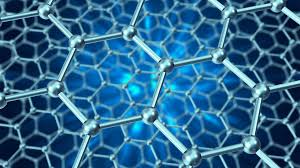
A new global standard to help industry measure graphene – the world’s strongest material – has been developed through a major international UK-led collaboration.
The work, involving the National Physical Laboratory (NPL), the University of Manchester and 15 leading research institutes worldwide, focuses on ISO/TS 21356‑2, a technical specification that sets out how to verify graphene’s thickness at the atomic scale.
Graphene is exceptionally strong, light and conductive, with the potential to transform technologies ranging from electric vehicles and energy storage to smartphones and advanced composites.
However, those benefits can only be realised at scale if manufacturers have confidence that the graphene they buy and use consistently meets demanding quality requirements.
To address this, scientists from NPL and the University of Manchester worked with international partners to agree a robust benchmark for confirming graphene’s single‑atom thickness – a defining feature that gives rise to its remarkable properties. Using transmission electron microscopy (TEM), they established a reliable method for determining whether a material is truly monolayer graphene, with the findings published in the journal 2D Materials and now embedded in the new ISO technical specification.
“Industry needs certainty,” explains Dr Andrew Pollard, Principal Scientist at NPL. “Our work ensures that companies can trust the material they’re using, whether it’s for lightweight vehicles, sports equipment, touchscreens, or advanced electronics.”
“NPL are world experts in standardisation. It’s been great to be able to learn from their expertise to develop a standard protocol that we believe will be useful and accessible to industry, so can support the exploiting the exciting properties of graphene in commercial applications,” said Professor Sarah Haigh, Professor of Materials.
The protocol enables laboratories worldwide to perform measurements reproducibly, ensuring that results are comparable regardless of where they are generated. The development also builds on NPL’s Good Practice Guide 145, produced with the University of Manchester, which has already supported businesses and researchers across the globe in measuring and characterising graphene.